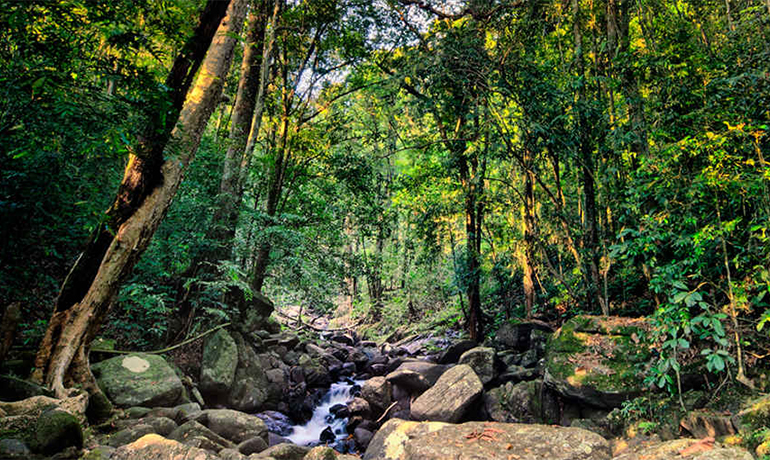

Jaldapara National Park situated at the foothills of the Eastern Himalayas in Alipurduar District of northern West Bengal, India, and on the banks of the Torsa River. Jaldapara is situated at an altitude of 61 m and is spread across 216.51 km 2 (83.59 sq mi) of vast grassland with patches of riverine forests. It was declared a sanctuary in 1941 for protection of its great variety of flora and fauna.
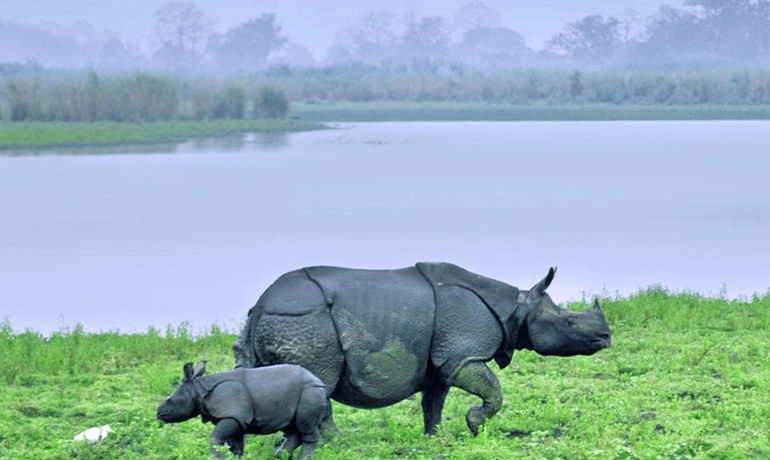
The forest is mainly savannah covered with tall elephant grasses. The main attraction of the park is the Indian one-horned rhinoceros. The park holds the largest rhino population in India after Kaziranga National Park in Assam.
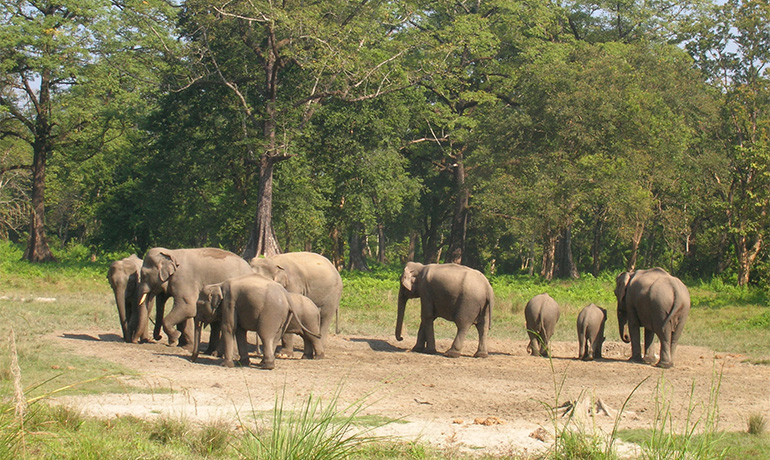
Wild elephants grazing at Jaldapara Wildlife Sanctuary
Many of the animals in the park are endangered, like the Indian one-horned rhino and elephants.
Other animals in the park include Indian leopard, Indian elephants, sambar, barking deer, spotted deer, hog deer, wild boars, and gaur. A floristic investigation was made during 2016 – 2018 to observe the tree diversity and their present status in the Jaldapara National Park (JNP) which is situated in the Dooars region of West Bengal, India. A total of 294 species of trees belonging to 189 genera and 63 families, including 4 species of gymnosperms were recorded.
Wallowing rhinos Rhinoceros unicornis in Jaldapara
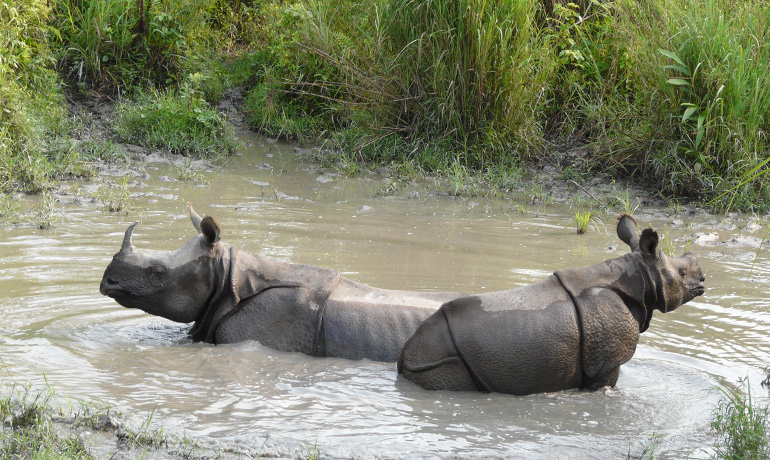
Today, the park has the largest population of the Indian one-horned rhinoceros in the state, an animal threatened with extinction,and is a Habitat management area (Category IV). The nearby Chilapata Forests is an elephant corridor between Jaldapara and the Buxa Tiger Reserve. [Nearby is the Gorumara National Park, also known for its population of Indian rhinoceros. The Office of the Divisional Forest Officer, Jaldapara Office is situated at Nilkuthi, Cooch Behar and the Office of the Assistant Wildlife Warden is situated at the heart point of the national park.
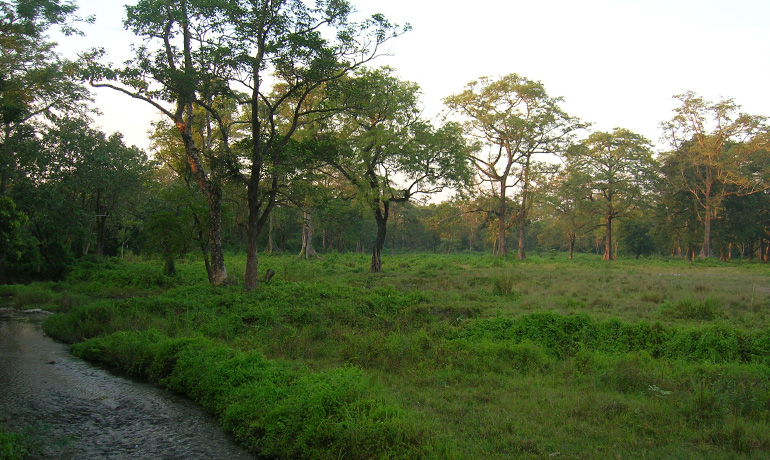
Evening at Jaldapara National Park
The present floristic survey in the Jaldapara National Park that aimed to prepare its spermatophyte flora has recorded the occurrence of 294 species (and one subspecies) of trees. All these plants are presented below in Table 1 along with their botanical and vernacular names, families, conservational status and usefulness if any. The recorded tree species are belonged to 189 genera and 63 families including 4 gymnosperms representing 4 genera and 4 families.

The 275 species of angiosperms are representing 173 genera and 56 families of dicotyledons and only 16 species from 12 genera and 3 families of monocotyledons . all the families has been arranged alphabetically at the beginning, and then the genera under a family and species of a genus are also arranged alphabetically for their easy and convenient accessibility.